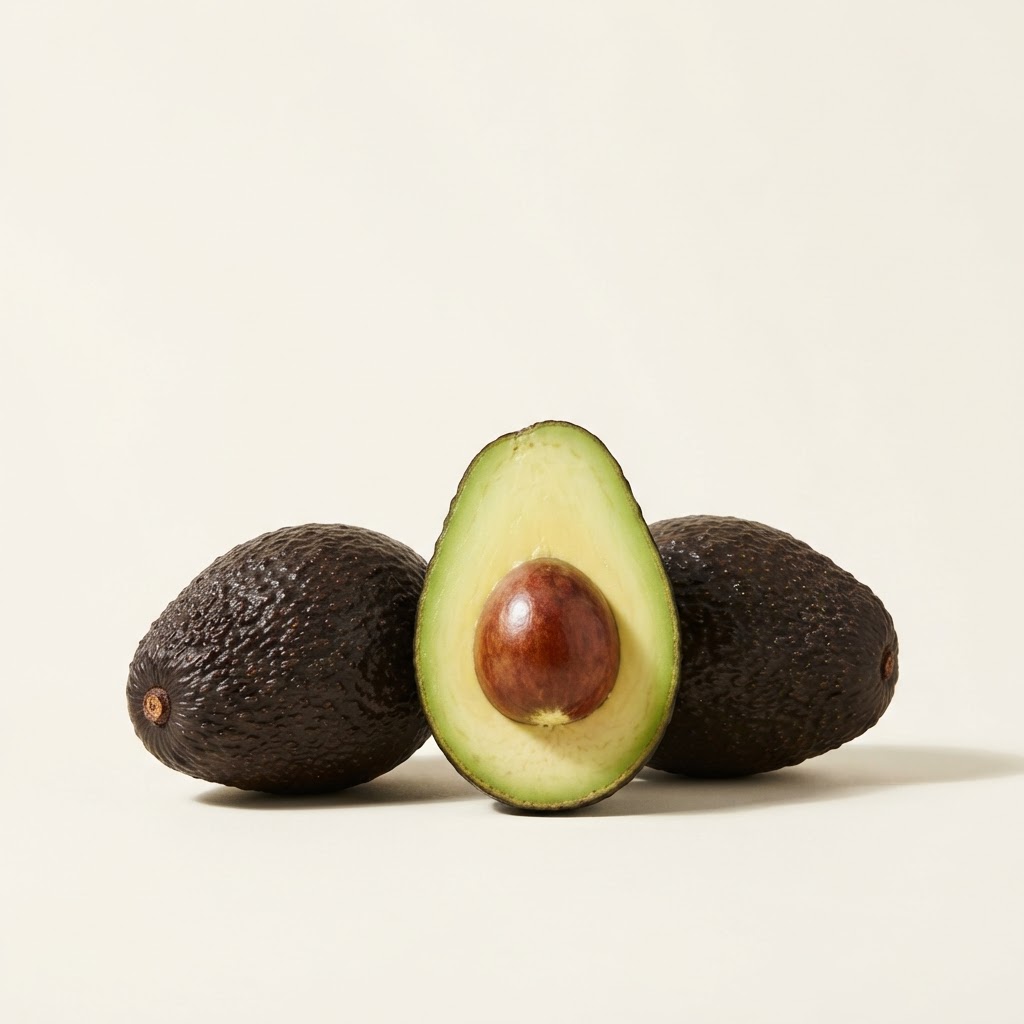
The perfect avocado starts with timing
Choosing an avocado at the correct stage sounds simple, yet it is one of the most common quality decisions made in a produce aisle or professional kitchen. A Hass avocado can look dark and mature while remaining firm inside, or stay surprisingly green even when the flesh is ready to eat. Learning how to tell if an avocado is ready means combining several clues rather than trusting colour alone.
That distinction matters to everyone who handles fresh avocado. Home cooks want clean slices for toast and creamy flesh for guacamole. Chefs need predictable texture at a precise service time. Restaurants must plan several days of demand without receiving fruit that ripens all at once. Retail buyers need attractive displays, useful shelf life and customers who return because the eating quality was dependable.
Ripeness also has a direct relationship with food waste. Fruit opened too early may be too firm to use; fruit held too long can develop brown flesh, fibres or off flavours. In a busy kitchen, those mistakes multiply quickly. Better selection, handling and avocado storage protect quality while allowing each piece of fruit to reach its best use.
This Avocado Academy guide brings together practical household checks and the more disciplined approach used by produce professionals. You will learn why avocados ripen after harvest, recognise five useful ripening stages, perform pressure and stem checks, avoid common mistakes and plan purchases around the day the fruit will actually be served.
Why Avocados Ripen After Harvest
The avocado continues an extraordinary natural process after it leaves the tree.
Avocados are climacteric fruit. Unlike produce that completes most of its maturation on the plant, a mature avocado normally begins its noticeable softening after harvest. The fruit is picked once it has accumulated enough oil and dry matter to ripen properly, but it can still be extremely firm when it enters the supply chain.
The key messenger is ethylene, a natural plant hormone produced by the fruit. As ethylene activity increases, respiration rises and a coordinated series of biochemical changes begins. Cell walls gradually weaken, complex carbohydrates change, aromas develop and the dense flesh becomes creamy. This is natural avocado ripening, not an artificial defect or an indication that the fruit was harvested late.
Temperature controls the speed of that process. Warm conditions accelerate metabolism, while cooler conditions slow it. A hard avocado left at normal room temperature may need several days to become ready. The same fruit kept too cold too early may soften unevenly or take much longer. Origin, season, maturity, fruit size and previous handling also influence the timetable, which is why no responsible guide can promise that every avocado will ripen in exactly two or three days.
Ethylene from nearby climacteric fruit can increase the pace. Placing a hard avocado in a paper bag with a banana or apple traps some of the naturally released gas while still allowing limited airflow. This is a useful answer to how to ripen avocado at home, although the fruit should be checked daily. A sealed plastic bag is less suitable because trapped moisture can encourage condensation and decay.
Professional ripening replaces guesswork with controlled conditions. Ripening rooms regulate temperature, airflow, humidity and ethylene exposure so batches progress more consistently. The objective is not simply to make fruit soft; it is to guide the avocado towards a defined firmness window while preserving internal quality, shelf life and flavour.
Mature fruit
Harvested firm
Ethylene rises
Natural signal
Respiration
Controlled by temperature
Flesh softens
Flavour develops
The Five Ripening Stages
A practical scale turns ripeness into a service plan.
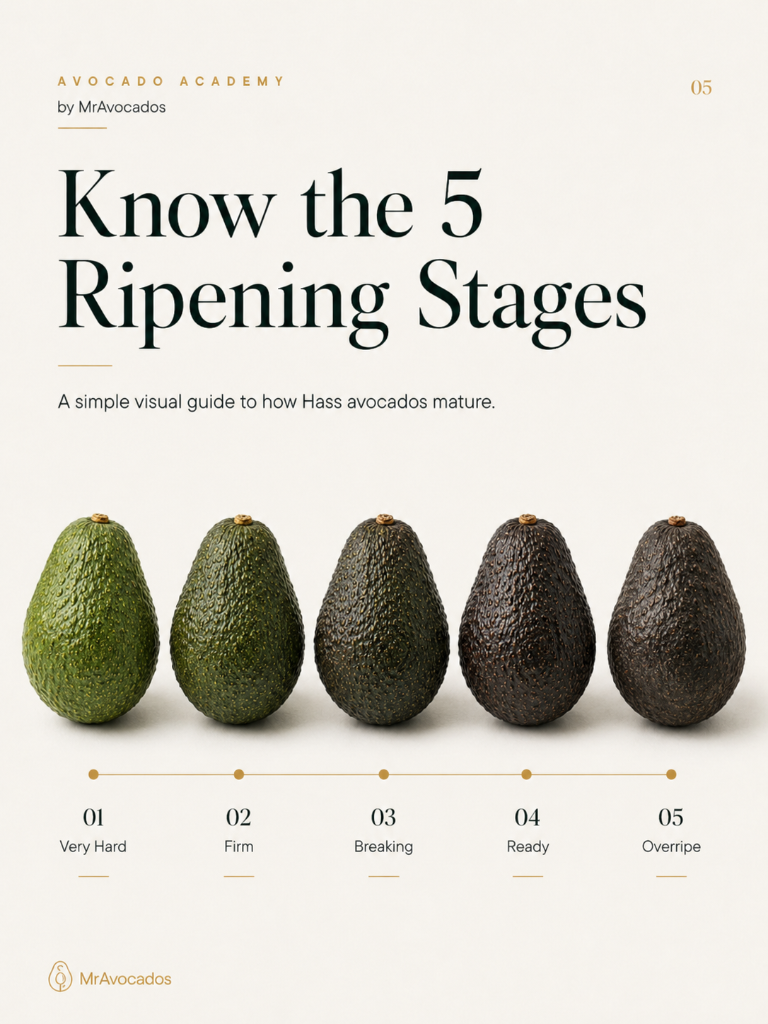
| Stage | Appearance | Firmness | Best use |
|---|---|---|---|
| 1Stage 1 | Bright green; freshly harvested look | Very hard; no give | Not ready — store at room temperature |
| 2Stage 2 | Green to dark green | Firm; minimal give | Wait — ideal for later service |
| 3Stage 3 | Darkening skin | Breaking; slight give | Soon — likely ready within 1–2 days |
| 4Stage 4 | Dark green to near black | Gentle, even give | Eat today — slicing, toast or guacamole |
| 5Stage 5 | Very dark; may appear sunken | Very soft or uneven | Overripe — inspect before use |
How Professionals Check Ripeness
The best assessment combines pressure, stem, colour, texture and internal quality.
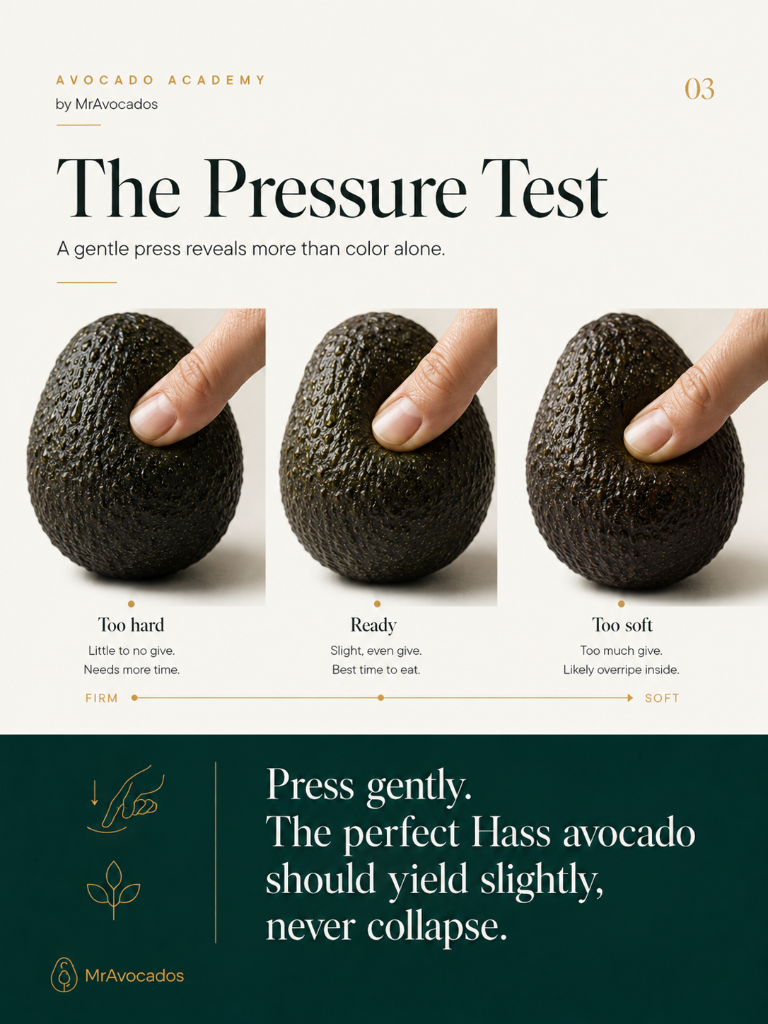
1. The pressure test
Hold the avocado in your palm and apply very gentle, even pressure with the broad area below your fingers. A ripe avocado yields slightly and springs back; it should not collapse. Avoid pressing repeatedly with a fingertip, which can bruise the flesh and create brown spots that the next person cannot see.
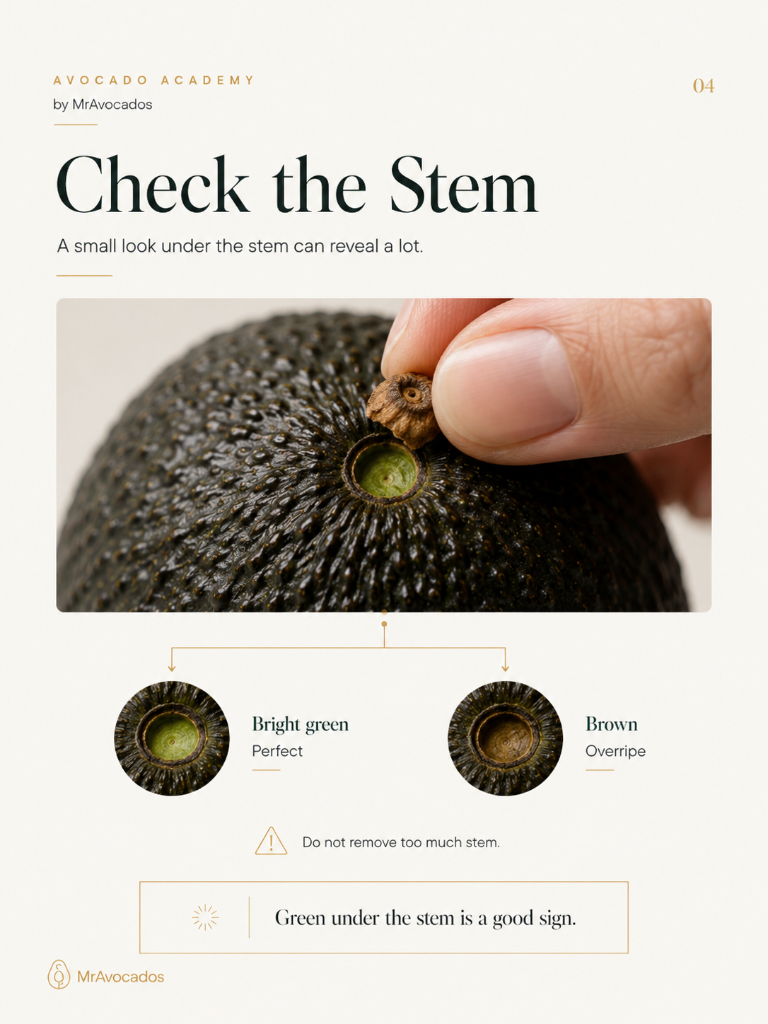
2. The stem test
The small cap at the top can offer another clue. If it lifts easily and the tissue beneath looks fresh green, the avocado may be ready. Brown tissue can indicate advanced ripeness or internal browning. If the cap resists, do not force it: the fruit may need more time, and removing the stem early exposes the flesh to air and microbes.
3. Skin colour
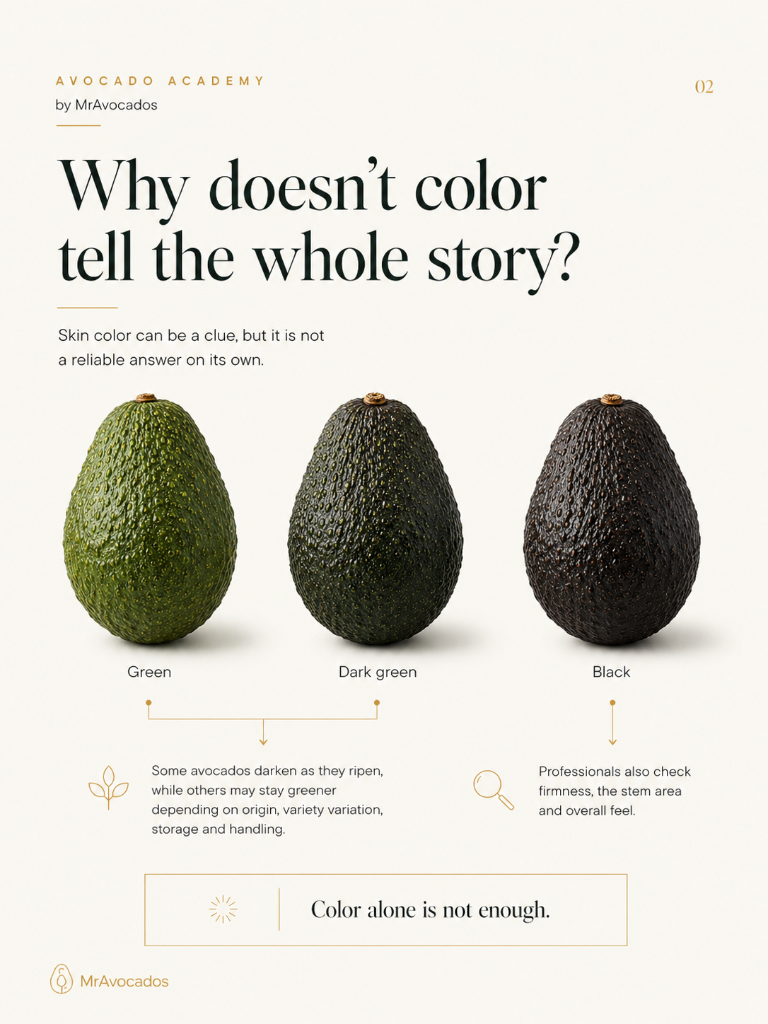
Hass skin generally changes from green towards dark green, purple-brown or nearly black during ripening. However, growing region, season and natural variation affect the result. Some ready fruit remains greener, while refrigerated or stressed fruit may darken before the flesh has softened correctly. Colour is useful for sorting, but never decisive on its own.
4. Texture and shape
Look for an even pear shape, intact skin and uniform firmness. Localised soft patches may signal bruising rather than ripeness. Deep dents, shrivelling, cracks, mould around the stem or a loose stone that rattles can indicate dehydration or advanced internal breakdown. Professional handlers assess the whole fruit, not just one attractive side.
5. Internal quality
The final answer appears only after cutting. Premium flesh should have a clean yellow-green colour, a fresh aroma and a smooth texture appropriate to its stage. Vascular browning, grey pulp, extensive black spotting, watery areas or fermentation indicate internal quality problems. Buyers therefore sample fruit from representative boxes rather than assuming every carton is identical.
Common Avocado Mistakes
Small handling decisions can shorten shelf life or damage otherwise excellent fruit.
Common mistake
Judging only by colour
A black Hass avocado is not automatically ripe, and a green one is not automatically unripe. Variety, origin and temperature history alter colour development. Combine colour with a gentle pressure test.
Common mistake
Squeezing too hard
Strong fingertip pressure damages the flesh beneath the skin. Use the palm and broad fingers, press once, and handle fruit as carefully as you would handle a peach.
Common mistake
Refrigerating too early
Cold storage can slow a hard avocado before natural ripening is established. Keep firm fruit at a moderate room temperature, then refrigerate once it reaches the stage you want to preserve.
Common mistake
Buying every avocado at one stage
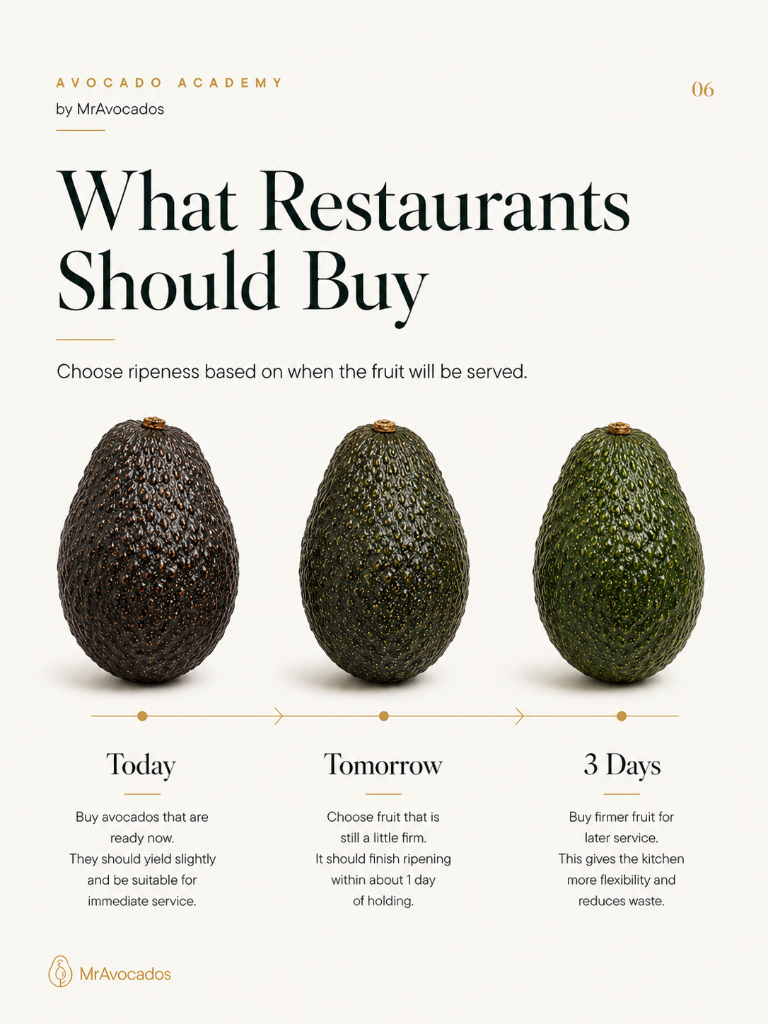
A bag of equally ripe fruit creates a narrow consumption window. Buy a mix: ready fruit for today, breaking fruit for tomorrow and firmer fruit for later in the week.
How MrAvocados Does It
Professional distribution converts natural variation into useful, clearly communicated ripeness windows.
For a home cook, checking one avocado is enough. Premium Hass Avocado Distribution requires the same care at a much larger scale. MrAvocados evaluates incoming lots, monitors their progression and prepares different ripeness profiles for professional customers whose menus depend on consistency.
Quality control begins before softening. Dry matter is an important maturity indicator because it relates to the oil development needed for satisfying flavour and texture. A fruit can soften without delivering a premium eating experience if its physiological maturity or handling history is unsuitable. Sampling, traceability and supplier relationships therefore matter as much as appearance.
Visual inspection identifies external defects, irregular shape, skin damage and signs of dehydration. Firmness checks then establish how a batch is progressing. Representative fruit may be cut to review flesh colour, vascular condition, seed cavity, flavour and texture. The purpose is to understand the lot rather than judge it from a single perfect avocado.
SoftRipe supports a controlled approach to ripening. Temperature, humidity, airflow and timing are managed to guide fruit towards useful service windows. The target can differ by kitchen: firmer flesh for clean sushi slices, a ready stage for salads and toast, or softer fruit for guacamole, sauces and high-volume preparation.
MrAvocados plans restaurant deliveries across Barcelona, Madrid, Valencia and Zaragoza around expected use. A customer serving fruit today may need ready avocados; another building stock for several service days benefits from staged firmness. This planning helps kitchens reduce waste, protect yield and maintain a consistent guest experience.
Consistency is never a claim that every natural fruit is identical. It is a commitment to measurement, communication and careful handling. By teaching customers what each stage means and matching deliveries to real consumption dates, MrAvocados helps Europe understand avocados one lesson at a time.
Frequently Asked Questions
Clear answers to the questions people ask most about ripe avocado selection, storage and quality.
Key Takeaways
Buy for the consumption date
Choose ready fruit for today, breaking fruit for tomorrow and firmer fruit for later service.
Use pressure, not colour alone
A slight, even yield is more informative than a dark skin by itself.
Check the stem carefully
Green tissue can be encouraging, but never force the cap or treat this as the only test.
Prevent avoidable food waste
Stagger ripeness, rotate stock and inspect fruit before opening too many pieces.
Store each stage correctly
Ripen firm fruit at room temperature and chill ready fruit to slow further softening.
Premium Hass Avocado Distribution
Need Premium Hass Avocados?
MrAvocados supplies restaurants, retailers and foodservice professionals with premium Hass avocados across Barcelona, Madrid, Valencia and Zaragoza.
Continue learning
Related Academy Articles
Understanding Ripening
The science behind ethylene and climacteric fruit
Explore topic Avocado AcademyDry Matter Explained
Why maturity influences flavour and texture
Explore topic Avocado AcademyHow to Store Avocados
A practical guide for homes and kitchens
Explore topic Avocado AcademyPeru vs South Africa
Origins, seasons and quality characteristics
Explore topic Avocado AcademyFarm to Restaurant
How premium Hass avocados move through Europe
Explore topic Avocado AcademySoftRipe Technology
Controlled ripening for professional service
Explore topicAvocado Academy by MrAvocados — Helping Europe understand avocados, one lesson at a time.